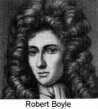
Robert Boyle
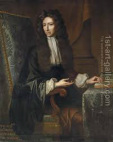
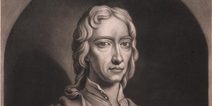
Robert Boyle was a great man who lived in the 17th century, he's one
of the founders of modern chemistry. He was born January 27th, 1627
from County Waterford that can be found in the south-east of Ireland.
Robert had been educated from Eton, then traveled and studied in
Europe. He came back from continent around 1644 very into science.
Robert settled in Dorset where a laboratory of his own was built. In
1655/1666, Boyle moved away again to Oxford, and it's where Robert had
gotten engaged Robert Hooke. She was an assistant, and together they
became a famous piece of experimental equipment connected with Boyle,
Time's back then idea of an experiment was sometimes disagreed
with.This was related to Aristotle's and others experiments had worked
out 2,000 years before. Robert was interested in looking at nature and
drawing. He was the first prominent scientist to perform controlled
experiments that his work was published with details concerning his
procedure, and observations. Robert started publishing in 1659 and
continued to do for the rest of his life. He used subjects like
philosophy, medicine and religion.
The next thing that came on his life was the Boyle's Law for which he
remains famous for. The rule states, "that if the volume of a gas is
decreased, the pressure increases proportionally. His rule could be if
all gases were made of tiny particles, Boyle tried to construct a
'corpuscular theory' of chemistry. He used a modern idea of AN
'element', as well as introducing A litmus test to tell acids from
bases, and introduced other standard chemical tests."
In 1660, together with 11 others people, Robert made a Royal Society
in London. Which brought other witness experiments and discussions of
what we would now call scientific topics.
In 1668, Robert moved permanently into London, living with his sister.
In 1680 he refused to be presidency of the Royal Society because the
oath required his strongly held religious principles.
Boyle died in London on 31 December 1691.
of the founders of modern chemistry. He was born January 27th, 1627
from County Waterford that can be found in the south-east of Ireland.
Robert had been educated from Eton, then traveled and studied in
Europe. He came back from continent around 1644 very into science.
Robert settled in Dorset where a laboratory of his own was built. In
1655/1666, Boyle moved away again to Oxford, and it's where Robert had
gotten engaged Robert Hooke. She was an assistant, and together they
became a famous piece of experimental equipment connected with Boyle,
Time's back then idea of an experiment was sometimes disagreed
with.This was related to Aristotle's and others experiments had worked
out 2,000 years before. Robert was interested in looking at nature and
drawing. He was the first prominent scientist to perform controlled
experiments that his work was published with details concerning his
procedure, and observations. Robert started publishing in 1659 and
continued to do for the rest of his life. He used subjects like
philosophy, medicine and religion.
The next thing that came on his life was the Boyle's Law for which he
remains famous for. The rule states, "that if the volume of a gas is
decreased, the pressure increases proportionally. His rule could be if
all gases were made of tiny particles, Boyle tried to construct a
'corpuscular theory' of chemistry. He used a modern idea of AN
'element', as well as introducing A litmus test to tell acids from
bases, and introduced other standard chemical tests."
In 1660, together with 11 others people, Robert made a Royal Society
in London. Which brought other witness experiments and discussions of
what we would now call scientific topics.
In 1668, Robert moved permanently into London, living with his sister.
In 1680 he refused to be presidency of the Royal Society because the
oath required his strongly held religious principles.
Boyle died in London on 31 December 1691.
Robert Boyle's Law
Bibliography:
"Robert Boyle ." Oracle thinkquest education foundation. N.p.. Web. 9 Jan 2014. <http://library.thinkquest.org/C005358/boyle.htm>.
"Famous Scientist ." the human touch of chemistry. N.p.. Web. 15 Jan 2014. <http://www.humantouchofchemistry.com/robert-boyle.htm>.
"Robert Boyle ." Oracle thinkquest education foundation. N.p.. Web. 9 Jan 2014. <http://library.thinkquest.org/C005358/boyle.htm>.
"Famous Scientist ." the human touch of chemistry. N.p.. Web. 15 Jan 2014. <http://www.humantouchofchemistry.com/robert-boyle.htm>.
This website was created by Bailey D.
I made this website because it was a class assignment.
