Alexander Fleming
His Personal Life
On August 6th, 1881, Alexander Fleming was born in Ayrshire, Scotland. Alexander Fleming was a Scottish biologist, botanist, pharmacologist, and bacteriologist. He also wrote articles on and studied immunology, bacteriology, and chemotherapy. He had 4 half siblings, because his mother was his dad's second wife. In 1900, he joined Territorial Army, until 1914. Later, in 1915, he married Sarah Marion Elroy, and had a son. Unfortunately, Sarah died 34 years after they got married, in 1949. Naturally, Alexander married again five years later, to Dr. Amalia Koutsouri-Voureka.
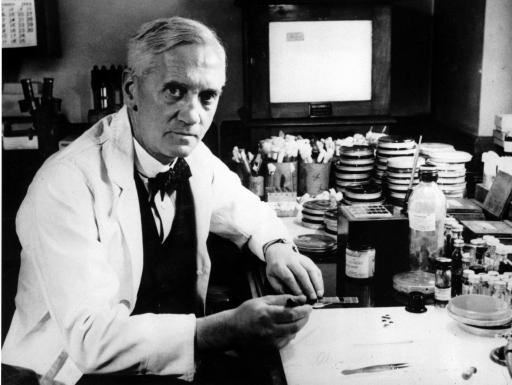
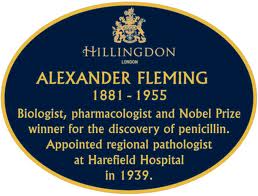 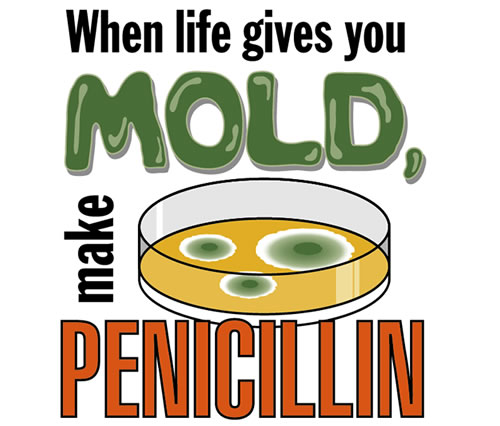 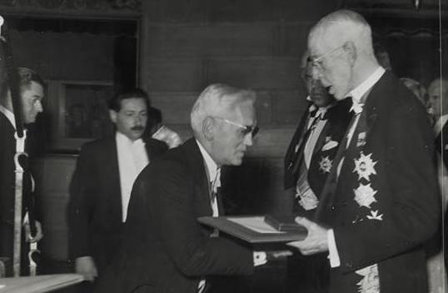 Pictures from left to right:
1 Alexander-Fleming 2 everyday-products-that-were-discovered-by-accident 3 Alexander_Fleming |
His Academic Life
Alexander Fleming had a life full of academic successes and failures. I'm going to discuss the successes because I don't have enough time to research his failures. Anyways. In 1928, Fleming left to take his family on a vacation. Since he was a professor at a school, he left a few of his petri dishes out so one of his assistants or students could check them out. When he got back, mold had started to grow on some of them. He was about to just clean them out, when he realized something peculiar. In one dish, the mold had eaten away all the disease stuff in it. He researched this, and experimented with it. One night, some of his snot dripped into the dish (I know, grody!), and all the bacteria died! This was a discovery later known as Penicillin. This discovery was a huge deal. He was immediately elected Professor of the School, and President of the Society of Microbiology. He also managed to become a member of the Pontifical Academy of Science and Honorary Member of almost all the medical and scientific societies of the world. He also became the Emeritus Professor of Bacteriology, University of London in 1948, knighted, and given the for medicine and physiology in 1945.
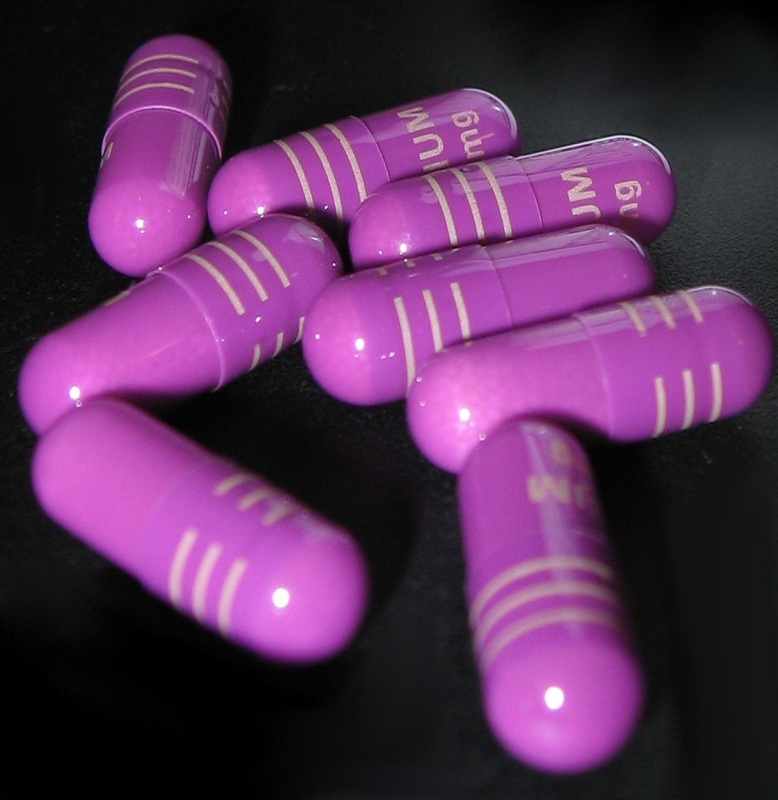
|
Sources:
http://en.wikipedia.org/wiki/Alexander_Fleming
http://www.nobelprize.org/nobel_prizes/medicine/laureates/1945/fleming-bio.html
http://upload.wikimedia.org/wikipedia/commons/4/4c/Alexander_Fleming.jpg
http://history1900s.about.com/od/medicaladvancesissues/a/penicillin.htm
http://upload.wikimedia.org/wikipedia/commons/0/00/Nexium_(esomeprazole_magnesium)_pills.JPG
http://en.wikipedia.org/wiki/Alexander_Fleming
http://www.nobelprize.org/nobel_prizes/medicine/laureates/1945/fleming-bio.html
http://upload.wikimedia.org/wikipedia/commons/4/4c/Alexander_Fleming.jpg
http://history1900s.about.com/od/medicaladvancesissues/a/penicillin.htm
http://upload.wikimedia.org/wikipedia/commons/0/00/Nexium_(esomeprazole_magnesium)_pills.JPG
Website Page by Elizabeth A, from Wisconsin, USA. Elizabeth thinks disease and bacteria are completely boss, so she made a page on a bacteriologist. Elizabeth can play 6 instruments, and has named her bass Roxanne, and her violin Lynette.


_pills.JPG)