Charles Darwin - Theory Of Evolution
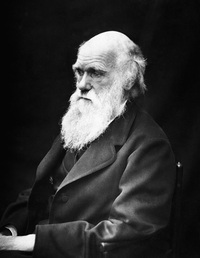
Charles Darwin was born on 1809, his family was very wealthy. Even his Grandfather Erasmus Darwin was even one of the leading intellectuals at the time. At first wanting to find a career in Medicine he then later switched to Divinity. He had later been asked to take a five year scientific trip on the boat HMS Beagle. Because of the major believe that the world have been created in seven days as 'Shown' in the bible, Theories such as Darwin's and Lyell's was not very accepted due to the nature of Religion at that time period. He had read Lyell's book called ''Principles of Geology'' which had talked about how fossils from rocks has shown that animals were around for thousands, or even millions of years. Lyell's theory was even more fashioned from the varies animals he had seen. His break through however was on the islands 500 miles south of Africa, the Galapagos Islands.
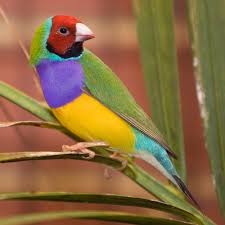
On this island there were many different Finches, each had a different way of living and thriving on the island. After returning to England in 1836, he had tried to solve the puzzles of how species evolved and the observations he had seen.
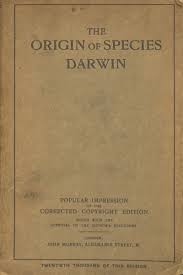
This lead to his proposal of Natural Selection, stating that animals who are better suited for their environment will survive in that area; and slowly after time the species had changed. He had worked on his theory for twenty years before announcing a joint discovery of their theory in 1858. In 1859 he published 'On the Origin of Species by Means of Natural Selection'. The book was beyond controversial and it's still going on today. He had worded that Homo Sapiens had possibly evolved from Apes, and that were we animals quite as realistically; this 'bashed' the Church's idea on how the world was made, he was attacked mostly by the church because of this. Over the years however, more people believe in his idea. He died in April 19, 1882
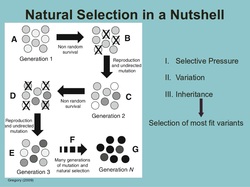
His idea in picture.
The picture above is basically what Natural Selection is, by his definition, the ones who survive will breed and slowly mold to their current environment; While the other ones that are less successful will die and the "stronger" will take their place.
Below is a terrible Comic, and horribly cheesy, that shows a quick/simple review.
Below is a terrible Comic, and horribly cheesy, that shows a quick/simple review.
Sources : http://upload.wikimedia.org/wikipedia/commons/3/3c/Charles_Darwin_01.jpgUnknown. "Charles Darwin." BBC News. BBC, n.d. Web. 15 Dec. 2013. <http://www.bbc.co.uk/history/historic_figures/darwin_charles.shtml>.
Image (Finch)-http://en.wikipedia.org/wiki/Gouldian_Finch
Image (Charles Darwin) http://en.wikipedia.org/wiki/Religious_views_of_Charles_Darwin
Image (Natural slection) http://bioteaching.wordpress.com/2012/03/17/natural-selection/
Darrell B.
This project wasn't that hard, it was pretty fun to actually do. I had already heard about Charles Darwin, he was one of my favorite Scientist for challenging, at the time, the Church basically. He went against popular belief at first then some slowly started to change to his side. It shows us how "Mean" we can treat a theory and then how understanding we can come from it. And one thing about me, is that I prefer to work alone.
Image (Finch)-http://en.wikipedia.org/wiki/Gouldian_Finch
Image (Charles Darwin) http://en.wikipedia.org/wiki/Religious_views_of_Charles_Darwin
Image (Natural slection) http://bioteaching.wordpress.com/2012/03/17/natural-selection/
Darrell B.
This project wasn't that hard, it was pretty fun to actually do. I had already heard about Charles Darwin, he was one of my favorite Scientist for challenging, at the time, the Church basically. He went against popular belief at first then some slowly started to change to his side. It shows us how "Mean" we can treat a theory and then how understanding we can come from it. And one thing about me, is that I prefer to work alone.
