Rachel Carson
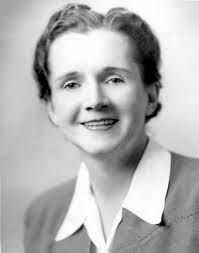
Rachel Carson was a writer, scientist, and ecologist. She grew up in Springdale, Pennsylvania and became a student of marine biology. Rachel later received her MA in zoology from John Hopkins University in 1932. She had written radio scripts during the time of the depression and soon began a fifteen-year career for the U.S. Fish and Wildlife Service. In 1941, Rachel Carson's writing career started to spring. She wrote a few books and then later devoted herself to her writing about conservation and natural resources. After World War II, she decided to warn the public about how pesticides were being misused and the dangers that can cause. She soon was attacked by the chemical industry and others because of what she did. Rachel Carson can now be remembered as the woman who saved the world and all of it's creatures.
After Rachel Carson began her life as a biologist her writing became a big factor in her life. She wrote two important books during the time she was working for the U.S. Fish and Wildlife Service. The two books were called The Sea Around Us and The Edge of the Sea. Both of these books explained her study of the ocean. Her key book she wrote was after World War II and it described the harm pesticides were doing to the world when they were being used the wrong way. This book was called Silent Spring.
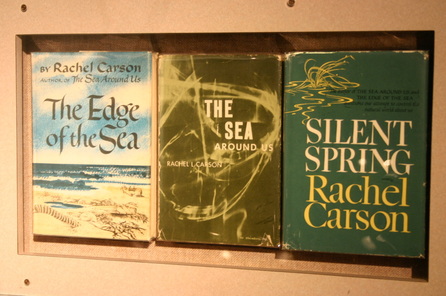
These are Rachel Carson's most important books she had written.
The book Silent Spring although taken in the wrong way is caused much more damage than just that. People referred to her as a "hysterical woman." There were various attempts to discredit her for her findings. Agriculture and trade journals had attacked her even before her book was put on shelves. Some places were going to take away ads from magazines and newspapers that were giving her book favorable reviews. Although Rachel Carson was being attacked it was also a very good thing for her. She became more famous and attracted a large audience from all over. The book did help out a lot because people started learning more about what the government was doing and how they were letting dangerous chemicals into the earth. This caused the government to stop poisoning the environment. Rachel Carson's book eventually made the government give up for real and stop using pesticides the wrong way.
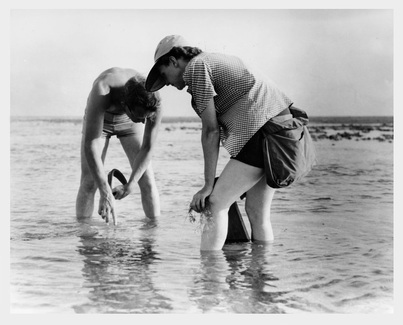
This image shows Rachel Carson studying the ocean with one of her colleagues.
The video above explains Rachel Carson's accomplishments and what she went through during her life. The below video is a brief description of what she did for her work.
Works Cited
|
Story Resources
|
Images Used
|
Created by Emmali Z. I chose Rachel Carson because she was a very interesting woman who almost didn't get credit for the work she did. I myself enjoy playing sports.
